The Emotional Spectrum of Innovation
Innovation is emotional as well as technical. An exploration of how curiosity, delight, discomfort and attachment influence whether people embrace or resist change
I learned about the law of diminishing returns in high school economics. Our Welsh teacher Mr Barnaby used the metaphor of a cup of tea. When you really want one, that first cup is amazing. So amazing you pour another, this time it’s maybe 80% as great as the first. Then a third cuppa is half as good. And so on. As irrelevant and unappealing as I found the metaphor (tea was what my grandma drank), that’s the piece of economics that stuck.
I think about diminishing returns sometimes when I’m choosing a movie I’ve already seen. There are films I loved the first time but can’t bring myself to rewatch. I know how I’ll feel, and I don’t want to. I know I’ll cry if I watch Beaches, cringe when Mary uses the wrong hair gel and be slightly wary of the beach for a while after my favourite disaster movie, Deep Impact. Don’t get me started on thrillers or movies with jump scares. It’s not just the negative emotions (sadness, repulsion, fear, anxiety). Sometimes I don’t even want to feel the super happy joy joy stuff either. There’s power in control and being able to emotion select. But there is an exquisite wonder from feeling an emotion for the first time.
Lately I’ve been thinking about emotions, wonder, and experience. We often assume that a great experience must be joyful, or that inspiration always comes from that same bright place. But what if life hasn’t always been joyful? What if your childhood was about survival?
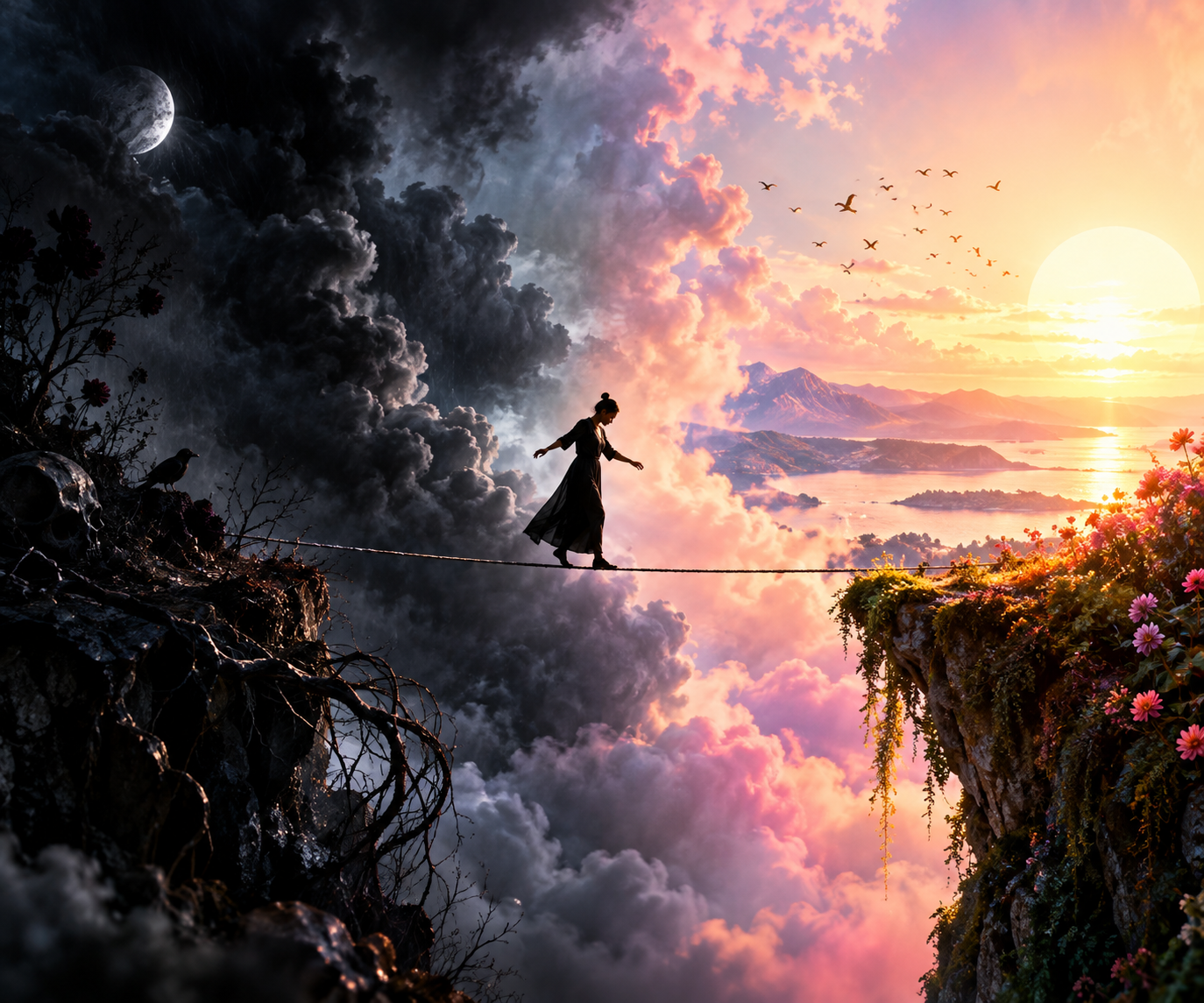
If inspiration and innovation are only allowed to grow from a narrow spectrum of acceptable emotions, we end up constrained. Yet some of the most powerful creativity comes from the other side of that spectrum, from struggle, violence, and depression. We see this in writing, in music and film. Here’s another great example - the video game Papo & Yo.
Image - Papa and Yo
Created by Montreal studio Minority Media, the game is the work of Vander Caballero, who drew directly from his childhood with an abusive, alcoholic father. In Papo & Yo you step into the shoes of Quico, a Brazilian boy navigating a surreal favela where houses sprout legs, stairways fold into the sky, and there’s a hulking creature called Monster. The favela is Caballero’s reimagining of his impoverished background. And Monster, gentle and helpful when calm, violent when he eats poisonous frogs (a substitute for alcohol) was his father.
The game doesn’t offer easy resolution. Instead, it faces trauma head on. Caballero said he wanted to make a game that could hold his story and maybe give others the language for theirs.
It’s a reminder of what games and by extension, creative technology can be. At its heart, this is the emotional spectrum of innovation, the recognition that inspiration can come from joy or pain, from awe or survival. When we widen the view to embrace that full range, we unlock new forms of creativity.
The start-up world, by contrast, can feel homogenous. At one time it was called the trust fund pathway, the idea being that only those with financial means could afford the risks of entrepreneurship. That’s a little unhelpful (as President Obama once said, progress depends on entrepreneurs taking a chance on starting something new). We want lots of entrepreneurs and innovators doing their thing. But if only a narrow group gets to take that chance, we all lose out. Not just on the economic contribution of diverse entrepreneurs, but on the greater prize, their creative genius.
I’ve spent much of my career building innovation and business capability, and it still amazes me how many programmes assume that entrepreneurs just magically turn up, ready to go. It’s ironic as we advise entrepreneurs to grow their customers from the ground up. Yet we often don’t apply the same thinking to entrepreneurs themselves. This gap is even greater for those who have had to work harder to reach the same place as those with advantages.
The more the same we keep our networks, programmes, and investor pools, the more we limit access to those who bring voices forged by adversity, resilience, and grit. Those who’ve had to navigate survival rather than opportunity.
Enter Virtual Reality
Here’s where my thoughts turn to VR, one of the few technologies that can drop us directly into another emotional reality.
VR’s roots go back to the 19th century with stereoscopes, through the Sword of Damocles headset of the 1960s, the Virtual Boy of the 1990s, and finally the Oculus headsets of the 2010s. Today, VR is used in gaming, training surgeons, educating students, even preparing astronauts.
Aside from the tech it’s how VR makes us feel.
I learned that first hand in New York at Madame Tussauds with some of the Mahuki crew. We tried the Ghostbusters untethered VR experience (created by The Void). At one point we were on top of a skyscraper shooting ghosts, but the ledge beneath us began to crumble. I’m scared of heights, and even though I knew it was digital, my body said otherwise. I couldn’t handle it and had to be rescued. It turned out I was in a very safe corridor.
In another example, the Rosa Parks VR experience from the National Underground Railroad Freedom Center, where you to sit in her place on the bus, confronted by the tension and fear she must have felt. For some, it is so emotionally confronting that dedicated debriefs are required to help people process it.
VR is a tool that shapes new ways of seeing the world and sometimes the most valuable thing we can see is the world through someone else’s eyes.
I find the idea of widening the emotional spectrum of innovation deeply inspiring and inclusive. If we only design for joy or from privilege, we miss half the story.
The future of innovation (maybe even our species) depends not only on our willingness to take a chance on our ideas but on our willingness to support diversity and inclusion and embrace the full spectrum of emotion and lived experience, because that’s where magic, wonder and new ideas take root.