

The Bird Island Dispatch forms part of Bird Island’s wider Applied Imagination practice, exploring how people and organisations respond to emerging technologies, shifting expectations and moments of transition.
Fresh Thinking
The Decision Before the Decision
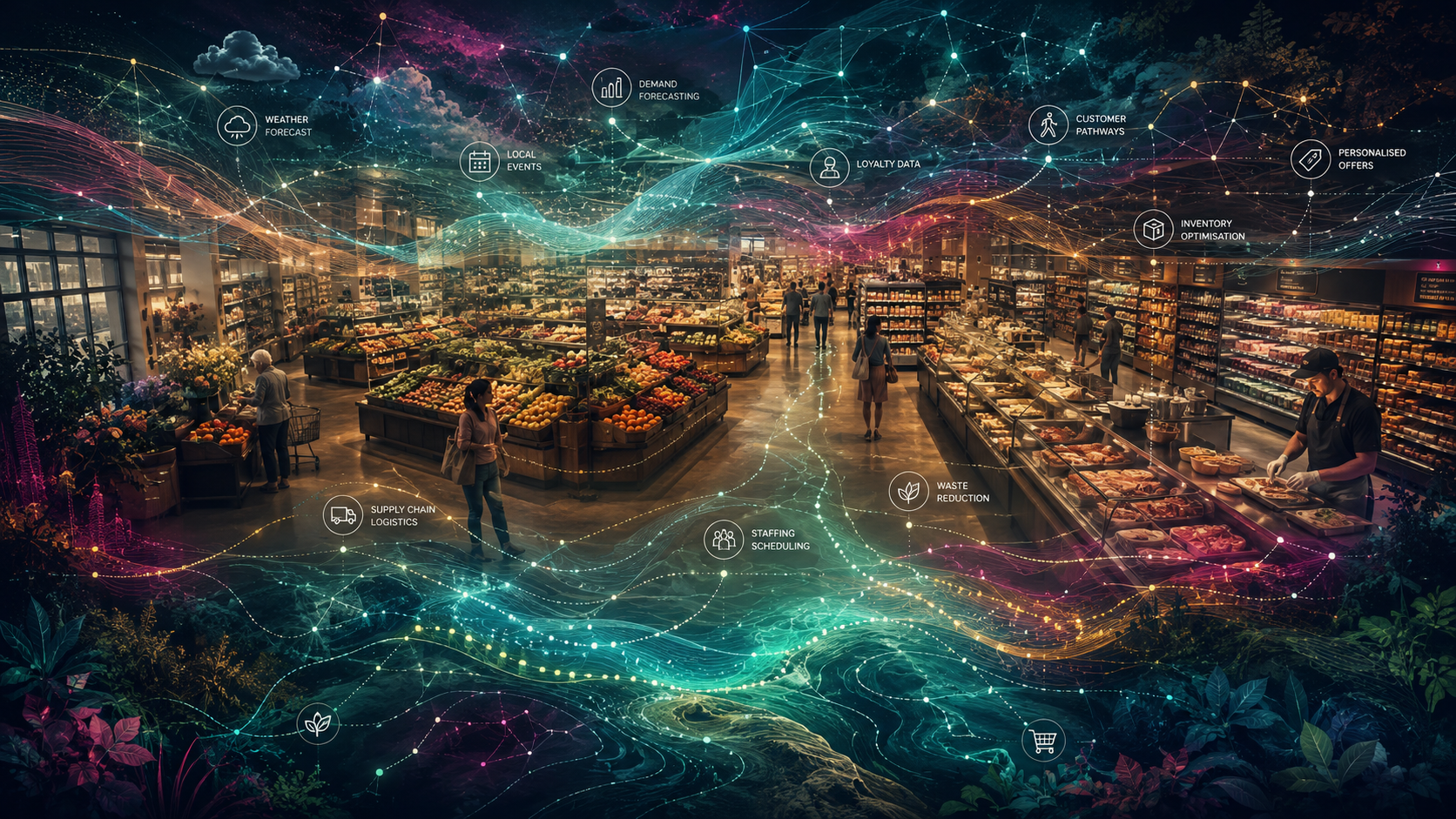
How do we make good decisions when certainty is impossible? This essay explores judgement, timing and the distinctly human capabilities that shape our choices in an age of artificial intelligence. Drawing on the unexpected lessons of a modern supermarket, it reflects on why the most important decision is often recognising that the moment to act has arrived. Read Post
Explore by Theme
Human Flourishing - Judgement, courage and wisdom in practice.
She Held Her Nerve - The quiet courage of staying the course. Exploring what happens after you've committed to a possibility. Drawing on the creation of New Zealand's first startup accelerator, it reflects on uncertainty, resilience, and the quiet courage of taking the next step when the future remains unclear. Read Post.
What’s for you, won’t go by you - Trusting the journey when the answer is no. This essay explores rejection, resilience and the role of hope in navigating uncertainty. Drawing on personal experience and a family proverb, it reflects on the importance of trusting ourselves, remaining open to possibility and recognising that not every opportunity is meant to be ours. Read Post
Am I Finished? - Knowing when to stay, and when to let go. How do we know when a chapter has given us everything it came to teach? This essay explores discernment, possibility and the courage required to recognise when it is time to persist, prepare or let go. Read Post
Practising Possibility - How we cultivate the habit of seeing what could be. Exploring how leaders, organisations and communities create momentum by remaining open to experimentation, imagination and emerging opportunity, even in periods of uncertainty and constraint. Read Post.
Applied Imagination - Creativity, curiosity and possibility in practice.
When Imagination Meets Devotion - The creativity born from loving other people’s worlds. Fan cultures demonstrate how people extend stories through reinterpretation, costume, remixing and participation. This essay explores how devotion generates creative momentum and how leaders can design environments that invite contribution rather than consumption. It reframes world-building as a strategic capability for organisations shaping the future. Read Post
Small Delights - Surprise as strategy. Small moments of unexpected care, humour or beauty can reshape how people experience organisations, services and places. This essay explores how “small delights” function as deliberate design interventions that strengthen trust, attention and belonging. It reframes surprise as a practical leadership tool rather than a decorative extra. Read Post
Innovation and Wonder for Global Good - Small signals that create big emotional connection. This essay explores how tiny design gestures, hidden symbols, and moments of surprise create meaning inside organisations, brands and experiences. Drawing on examples from digital culture, public art, accelerators and social initiatives, it shows how “Easter Eggs” function as strategic tools that deepen engagement and belonging. The piece introduces surprise as a deliberate innovation technique rather than a decorative extra. Read Post
The Wonder of Horror - Why discomfort can deepen engagement. Experiences that sit slightly outside comfort zones often create the strongest memories. This essay explores how tension, surprise and uncertainty can support deeper learning and reflection when used thoughtfully. It introduces the idea that wonder sometimes begins at the edge of unease. Read Post
Self-Made Rituals - Turning ordinary streets into places of discovery. Tiny personal rituals change how we experience everyday environments. This essay explores how self-created games and habits strengthen awareness, creativity and emotional connection to place. It reframes micro-play as a practical tool for sustaining imagination. Read Post
The Twelve Days of Christmas - A seasonal exploration of behaviour and meaning. Festive rituals as signals of belonging, tradition and shared imagination. It explores how repetition and storytelling shape memory and community identity. The piece shows how even familiar cultural practices carry insight for experience design and leadership. Read Post
Signals - Recognising emerging patterns and shifts.
Restoring Sight Lines - How perceptual filtering shapes what we notice. What we see is shaped by expectation, attention and habit. This essay explores how leaders can adjust their perceptual filters to recognise opportunities that are already present but overlooked. It introduces noticing as a strategic capability inside complex systems. Read Post
Making Room - How small acts of care quietly change a city. Cities evolve through everyday acts of generosity and creativity as much as through formal planning. This essay explores miniature libraries, community gestures and neighbourhood creativity as signals of social vitality. It highlights how permission-making enables collective imagination to flourish. Read Post
Experience Design - How environments shape behaviour and meaning
Brazil - Lessons in collective decision making and civic imagination. Drawing on observations from São Paulo, this essay explores collective decision making, civic imagination and the role of elder leadership in shaping long-term futures. It reflects on how cultural context influences how strategy is discussed and enacted. The piece highlights the importance of perspective-shifting experiences for leaders working across systems. Read Post
Designing the Queue - Why the small moments shape everything. Queues are often treated as operational necessities rather than designed experiences. This essay explores how waiting environments influence perception, anticipation and memory. It shows how small moments of attention can reshape entire journeys through services, exhibitions and organisations. Read Post
Artefacts and Anchors - Why objects carry memory and meaning. Objects shape journeys. This essay explores how artefacts act as emotional anchors linking experience, identity and place. It introduces the idea of a “journey artefact economy” in which meaning, not utility, becomes the primary source of value. Read Post
Infrastructure - The systems that enable innovation to endure
Transactional Friction - Bringing wonder to life. Beautiful ideas often fail not because they lack vision but because they are difficult to sustain. This essay explores the hidden costs, maintenance requirements and operational realities behind ambitious experiences and innovation programmes. It introduces transactional friction as a key strategic consideration when turning imagination into practice. Read Post
How We Measure - From vanity metrics to butter. Measurement shapes behaviour. This essay explores the difference between metrics that signal activity and those that signal meaning. It invites organisations to reconsider what progress actually looks like when working inside innovation and systems change. Read Post
Physical Spaces for Innovation - Why environments shape how ideas move. Innovation does not happen in neutral settings. This essay explores how spatial design influences collaboration, imagination and risk-taking across teams and institutions. It highlights the role of physical environments in enabling experimentation and shows how thoughtful spatial cues can unlock different kinds of thinking. Read Post
Future Workforce - Capabilities and transitions shaping future work.
When Email Arrived - Learning how to think alongside AI while the rules are still being written. Reflections on what it means to write and think with AI while expectations about authorship, originality, and visibility are still evolving. Why maintaining a visible voice may matter more than we realise as intelligent systems increasingly shape how ideas and opportunities circulate. Read Post
Fluency of Ideas - A future workforce capability. Idea fluency is the ability to generate multiple possibilities rather than search for a single correct answer. This essay explores why this capability is becoming essential in an AI-shaped world where adaptability matters more than certainty. It positions curiosity and experimentation as strategic preparation for future work. Read Post
The Emotional Spectrum of Innovation - Why feeling is infrastructure for change. Innovation is often framed as technical progress, but emotional response shapes whether new ideas succeed or fail. This essay explores how curiosity, delight, discomfort and attachment influence adoption and engagement with new systems and experiences. It introduces emotional literacy as a practical leadership capability for navigating transformation. Read Post
Frontier Technology - Capabilities and transitions shaping future work.
Press Start to Feel Something - How digital environments speak to the body. Digital environments increasingly communicate through touch, feedback and physical response. This essay explores haptics as an emerging layer of experience design and interaction. It suggests that future digital systems will be understood as much through sensation as through screens. Read Post
Cyber Innovation - Building capability at the frontier of trust and sovereignty. Cyber innovation is often framed as a technical discipline, but its real impact sits at the intersection of leadership, sovereignty, workforce development and institutional confidence. This essay explores how emerging cyber capability creates opportunities for Māori participation, national resilience and future-focused economic development. It positions cyber not simply as infrastructure, but as a domain where new models of partnership and innovation leadership can emerge. Read Post